HOW CHURCHES ACROSS EUROPE KEEP THEIR CONGREGATIONS WARM
Anyone who has sat through a January service in an old stone church or chapel will know that it's your feet that go first. The cold comes up through the floor and into the pew, and by the end of an hour, even the most attentive minds can start to drift towards the hall, the tea urn and the radiators.
Churches are awkward buildings to heat, and that's true pretty much everywhere. The walls are thick stone, the roof is a long way up and the building might only be used for a few hours a week. Warm air rises, so a boiler and radiators can spend hours heating the roof space before anyone sitting in a pew notices much difference.
Broadly there are two ways of going about it. You can try to heat the building, or you can heat the people and more or less leave the building as it is. A campfire is a reasonable way to picture the second one, because the air around you can be freezing and you'll still be warm on the side facing the fire. Which of the two a church goes for has a lot to do with history and habit, and the answer looks quite different depending on which side of the North Sea you're on.
How we ended up heating the whole building
For most of their history, British churches weren't heated at all and congregations simply wrapped up. In Georgian churches, the better-off families sat in enclosed box pews, which might have cushions and carpet, and in winter small charcoal foot warmers were brought in. Historic England notes that wooden panelling and raised pew platforms helped too, by cutting the heat people lost to cold walls and floors. In other words, the effort went into keeping the people warm and the building was left alone.
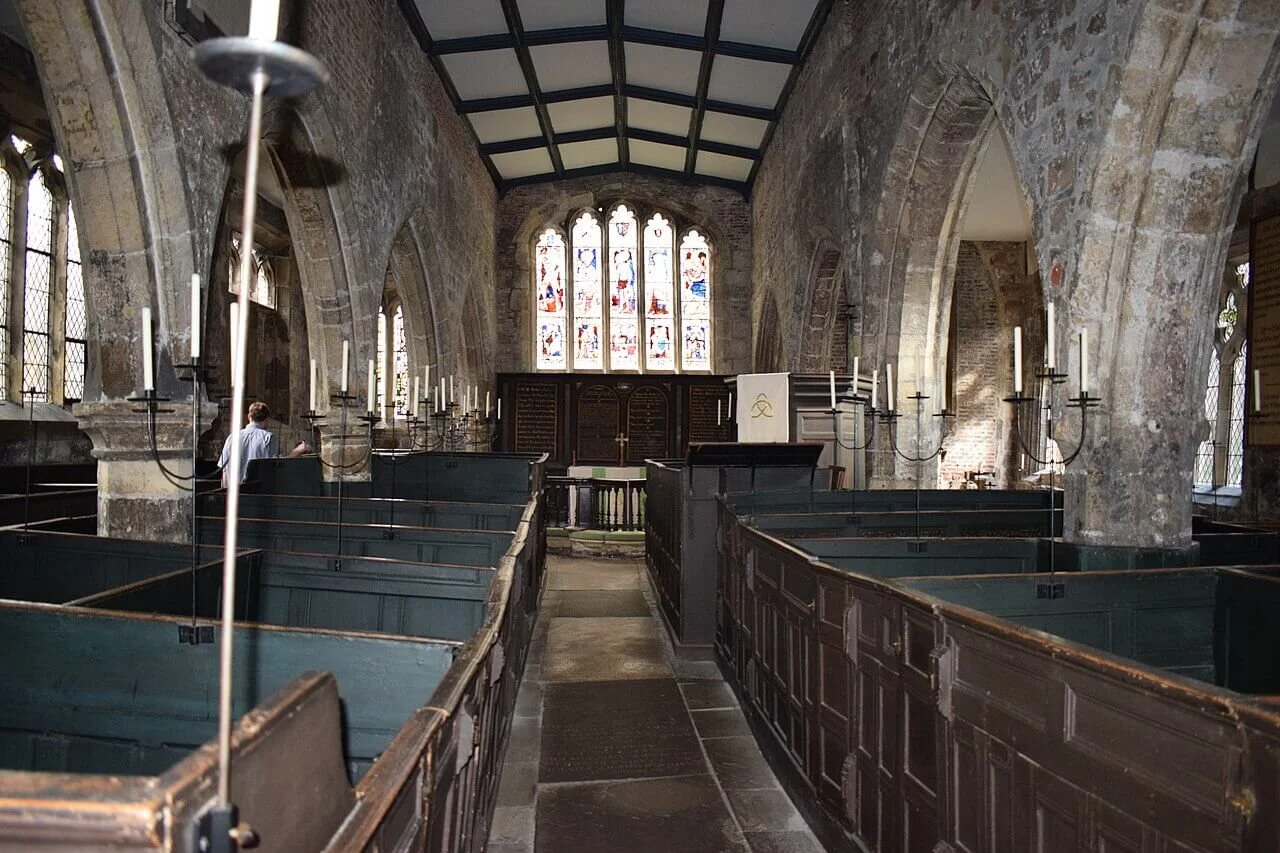
Box pews from the 17th and 18th centuries at Holy Trinity, Goodramgate, York. Photo: Thedavegray, CC BY-SA 4.0
That changed in the mid-19th century. The great wave of Victorian church building and restoration brought in large warm air stoves, one of the best known being the cast-iron stove that Goldsworthy Gurney patented in 1856. Gloucester Cathedral had one from 1865 until 1958, and the one at Tewkesbury Abbey, installed around 1875, was converted to run on gas in 1987. At about the same time, restorers were taking out the box pews and putting in open benches, so the things that had been keeping people warm were disappearing just as the stoves arrived.
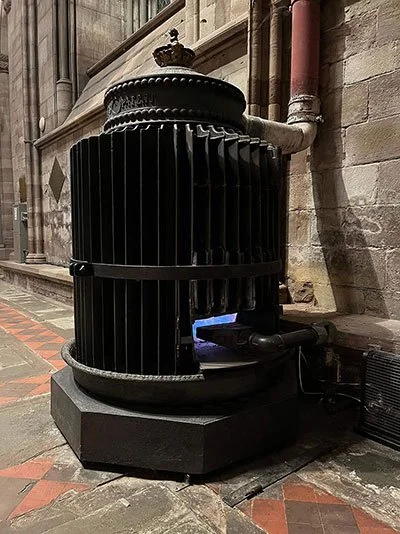
A Gurney stove at Hereford Cathedral, since converted to run on gas. Photo: Dbsseven, CC BY-SA 4.0
Not every church kept up. The American evangelist D. L. Moody, who preached widely in Britain in the 1870s and 1880s, used to tell a story about a Scottish church so cold that he could see his breath. When he asked how people were expected to keep warm, he was told, 'we expect the pulpit to warm us up'.
Over the next century the stoves gave way to boilers, radiators and blown warm air, but the idea of warming the whole space stuck, and that's broadly where a lot of UK churches still are. A church is usually thought of as comfortable at around 18°C, and the Church of England reckons heating makes up over 80% of a church's energy use on average. Getting a large stone building up to temperature takes a long time, too. In 2015 the boiler at St Cuthbert's in Darlington had to be switched on at 2.30am the day before an 8am service, almost 30 hours ahead, and even then, it rarely got the church above 10°C. The heating bill that year was £8,000, which would be nearer £15,000 at today's gas prices.
What's changing in the UK
Over the last few years, higher energy prices and the push to move away from fossil fuels have made a lot of churches look again at how they're heated, and many have started to heat the people instead of the building.
Heated pew cushions are one of the simplest ways in. Holy Trinity at Whitfield in Northumberland, about 750 feet up in the North Pennines, replaced an oil-fired warm air heater with electric heated cushions that only warm up when somebody sits on them. According to the vicar, the congregation became reluctant to stand up for the hymns.
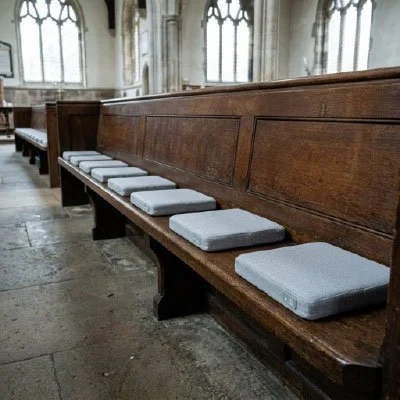
Heated seat cushions on an old pew
Radiant heating is another option, and one we often recommend. It warms people and surfaces directly, much like the campfire, and does so within minutes, so it only needs to be on while there's somebody there to benefit. In a Church of England trial at St Matthew's in Bristol, chandeliers fitted with far infrared heaters warmed the area beneath them by about 10°C within 20 minutes, and the running cost of a Sunday service was about a tenth of what the old gas system cost on a cold day.
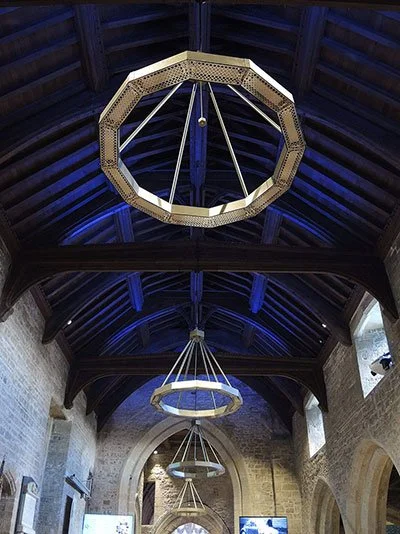
New overhead heaters along the nave of St Andrew's Church, Clevedon, fitted in 2025. Photo: Neil Owen, CC BY-SA 2.0
Radiant heating is not universally loved, though. If the heat isn't applied evenly, people can end up with a hot head while remaining chilly everywhere else, so the heaters need to be aimed at where people actually sit and feet usually need something of their own. The controls need some thought too, because an ordinary thermostat measures the temperature of the air, which isn't much use for a system designed to warm people instead. Methodist Insurance also advises that only far infrared heaters (the type that don't visibly glow) should be used in churches, and that you speak to your insurer before changing the heating.
Where a building is busy enough to justify heating the whole space, heat pumps are starting to take over from gas. Wetherby Methodist Church, which is Grade II listed, has replaced its gas boiler with heat pumps that serve underfloor heating in the chapel and radiators elsewhere. They take longer to warm up than the old boiler did, but they reach the temperatures needed. Sewerby Methodist Church on the Yorkshire coast has swapped its night storage heaters for an air-to-air heat pump.
The guidance across the denominations points the same way. The Church of England's heating advice starts with the people using the building and what they need, the Methodist Church suggests moving meetings out of the church in the cold months and the Church of Scotland recommends under-pew heaters and infrared panels to keep people warm without heating the whole space. Historic England sums it up by saying that heating systems should heat the people and not the air.
How they do it on the continent
Expectations on the continent can be quite different. In Germany the usual rule of thumb is to keep an empty church at about 8°C and go no higher than 16°C during a service, mainly to protect the building, the organ and any artwork, all of which cope badly with sudden swings in temperature and humidity. For the same reason, German church energy advisers recommend warming a church by no more than about 1°C an hour, which can mean the heating going on 10 to 12 hours before a Sunday service. Norway sat at the other end of the scale, with churches in Oslo typically kept at 20 to 22°C until energy prices rose sharply in 2022.
Heating the person rather than the building has a long history in Europe as well. Foot stoves, small boxes holding hot coals or embers, were common in the Netherlands and northern Germany from the 17th century and were taken along to church.
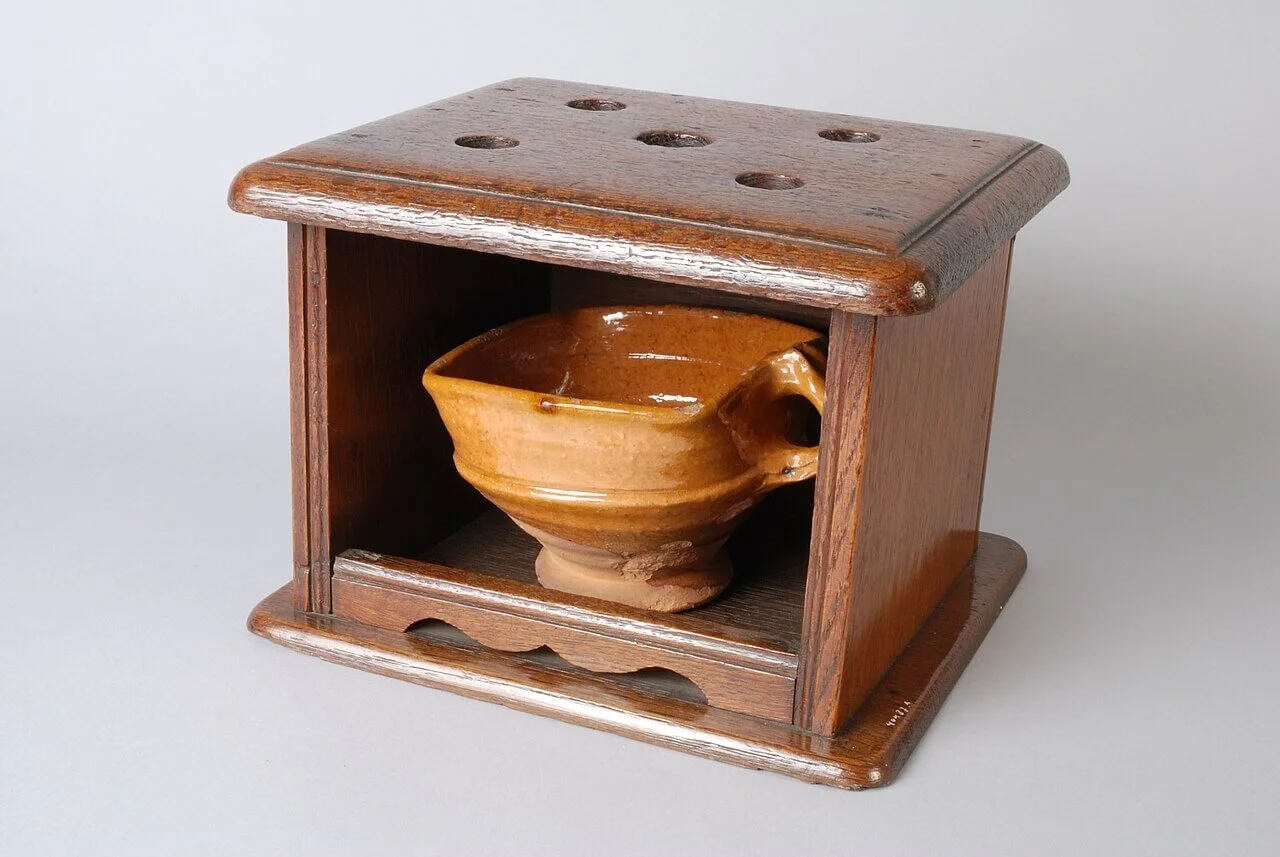
A Dutch oak foot stove with its earthenware fire pot, from the second half of the 19th century. Photo: Museum Rotterdam, CC BY-SA 3.0
The modern equivalent was tested properly by an EU-funded project called Friendly Heating, which ran from 2002 to 2005 in two very cold churches in the Italian Dolomites. Thin electric heating foils went under the kneelers, under the seats and on the pew backs, with feet dealt with first because they feel the cold most. The researchers concluded that this kind of local heating suits historic churches best, because the rest of the building stays in the cool, steady conditions its paintings and woodwork are used to, and their work fed into a European standard on heating places of worship. They were realistic about it, though, and still advised people to dress warmly.
Pew heaters are now common in southern Germany, often just in the front few rows, although one manufacturer admits the older glowing type were known as 'leg toasters'. At the National Basilica of Slovakia, heated seat cushions are reported to be the only heating there is. In Sweden, researchers hid infrared heaters inside chandeliers to warm people's upper bodies and fitted heating foils and heated carpet inside the old box pews for their feet, so the box pews are back to keeping people warm.
In Berlin, the Lindenkirche replaced its gas-fired warm air heating with infrared heating in the pews and at the altar, pulpit and organ. Its energy use fell from about 180,000 kWh of gas to just under 7,000 kWh of electricity. The church's environment office, which ran the test, was honest about the limits. People were comfortable for up to about an hour and a half, but the organ could only be played for around an hour and professional musicians refused to give concerts there.
Getting radical
Some churches have gone a lot further. The environment office behind the Berlin test argues that heating was never something church buildings needed. A few prominent churches in Berlin had heating from around 1850, but it only became common there from about 1950, and in their view a warm church is a comfort habit that people have since come to take for granted.
When energy prices shot up in 2022, more than 20 German dioceses and regional churches put that thinking into practice. Their joint advice was not to heat churches at all if possible, to hold them at no more than 5°C if some background heat was needed and to leave blankets by the door. By their estimate each degree saves 10 to 15% of a church's heating energy, about double the saving you'd expect at home. Oslo's churches were turned down to 15°C, and people were told to keep their coats on, weddings and funerals included.
Other churches stopped using the main building in winter altogether. In Germany this is called a Winterkirche, or winter church, and it usually means moving services into the parish hall or a side chapel. One Protestant congregation in Hagen moves into its hall from Harvest Festival to Easter, and its heating bill fell by about 40%. In 2022 the diocese of Lund in Sweden expected about 150 of its 540 churches to close fully or partly for the winter.
The idea is centuries old. Villages in northern Russia traditionally had a large unheated summer church next to a much smaller winter one, and at Kerimäki in Finland the largest wooden church in the world, which seats 5,000, has no heating at all and holds its winter services in a 250-seat winter church next door.
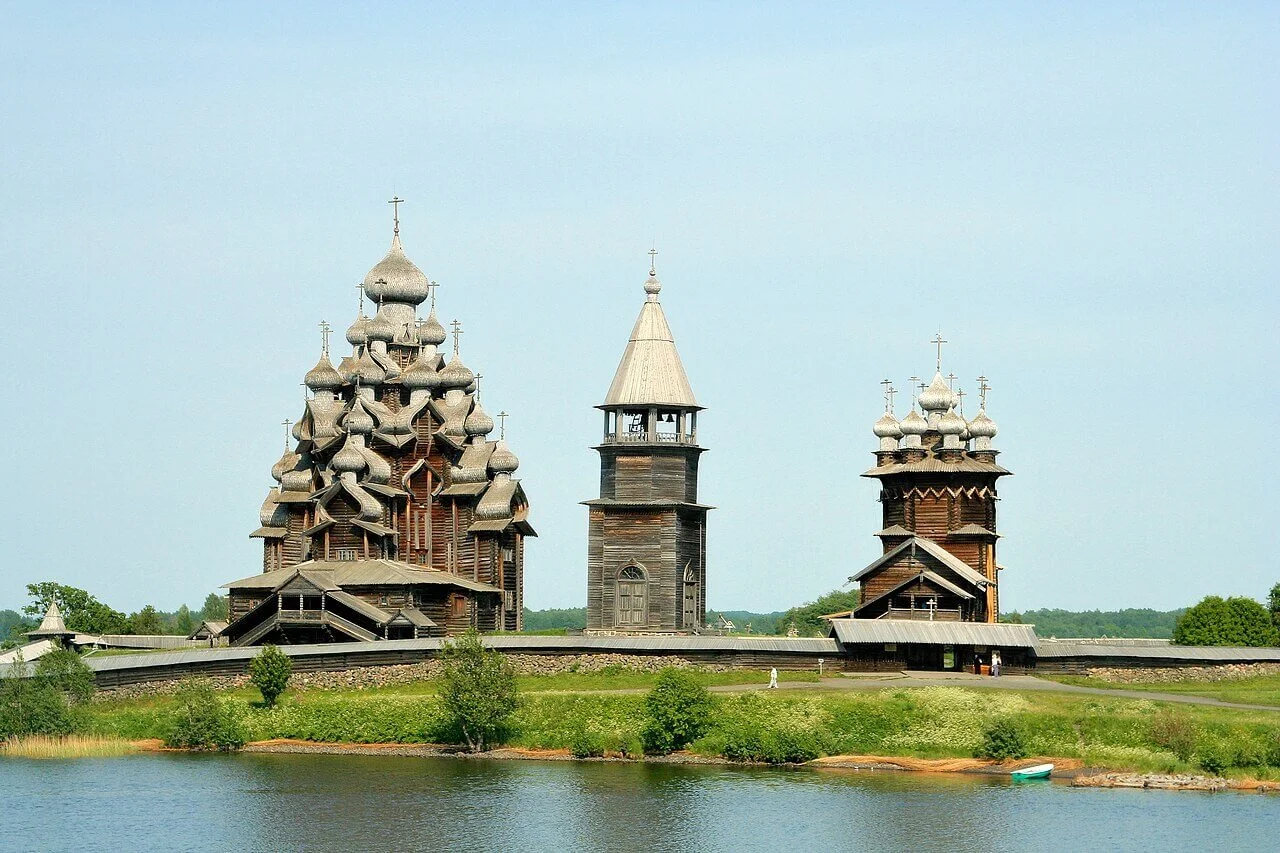
Kizhi in Karelia: the large summer church (left), the bell tower and the smaller winter church (right). Photo: MatthiasKabel, CC BY-SA 3.0
There are two catches. The first is damp. A colder church is generally a damper one, and when Swedish churches started switching off in 2022, Tor Broström of Uppsala University warned that the risk of mould was serious and that a church with mould may have to close. The Church of Sweden's advice to its parishes was to put a few cheap humidity meters in places like the organ and the textile cupboards, photograph things before and after the winter and keep the heating system above 5 or 6°C so that the pipes don't freeze. The German advice gives a target as well, which is a relative humidity of between 45 and 70%.
The second catch is people. Not everybody can shrug off an hour at 10°C, and older people, small children and anyone who is unwell or can't move about much will feel it sooner. UK public health advice is that homes should be heated to at least 18°C, and that this is most important for people over 65 and those with health conditions. An hour in church isn't the same as living in a cold house, but the risk of losing people can't be ignored. At St Cuthbert's in Darlington, some of the older members stayed away when the church was too cold.
What UK churches could take from all this
I wouldn't suggest 5°C to a British congregation, and I doubt many would thank me for it. Even so, there's quite a lot here that UK churches could borrow, and most of it doesn't depend on the denomination or the age of the building.
The cheapest changes cost nothing at all. Agree what temperature the church is aiming for in winter and tell people, so they can dress for it. If the congregation would fit in the hall, the schoolroom or a side chapel, at least think about moving there for the coldest couple of months.
Keeping draughts out is worth the effort too, and it's often cheap, although work on a listed building may need permission first. Sealing gaps around windows, doors and cracks in the stonework gives back some of what the old box pews did, so that people warmed by radiant heaters or heated cushions don't have cold air wafting round their ankles.
When the heating is due for replacement, look hard at heating the people before assuming the answer is another boiler. That might be heated cushions, radiant heaters overhead or a mix of the two, ideally zoned so that only the seats in use are heated. Plan for the people who feel the cold most from the start. The Church of England's heating checklist asks whether regular users include small children or elderly people who need to be a little warmer, and the answer might be to keep the warmest seats for them, have blankets to hand and make sure there's a properly warm room for coffee afterwards.
If the heating is going to be turned down a long way, spend a few pounds on a humidity meter before the winter, particularly if there's an organ to look after.
Done well, this takes us back to something like the churches of 300 years ago, with a cool building and a warm congregation, only with rather better kit than a box of hot coals.
Sources
History
Sustainability and heritage conservation: heating and thermal comfort in UK churches, PhD thesis, University of Cambridge (early churches unheated)
Going to church with the Georgians, Jane Austen's London (box pews and charcoal foot warmers)
Box pew, Wikipedia (box pews removed in the mid-19th century)
19th-century radiators and heating systems, Building Conservation (Victorian warm air stoves, Tewkesbury)
Gurney's Patent, Grace's Guide (1856 patent)
Gurney stove from Gloucester Cathedral, Science Museum Group
Toasty toes in colonial times, Fraunces Tavern Museum (foot stoves)
How to warm up the church, from Moody's Stories
UK
Church of England heating guidance and its heating checklist
Radiant heating trial, St Matthew's, Bristol, Church of England case study, 2023
Heated pew cushions at Whitfield, Historic Religious Buildings Alliance, 2020
Methodist Church net zero guidance, first steps
Infrared heating guidance, Methodist Insurance
Church of Scotland guidance on buildings and its Better Heating Scheme tips
Energy efficiency and places of worship, Historic England
Congregations lament having to offer visitors a cold welcome, Church Times, 2015 (Darlington)
Gas and electricity prices in the non-domestic sector, DESNZ, summarised in the UK Business Energy Price Index, Energy Plus (gas price adjustment for Darlington)
Minimum home temperature thresholds for health in winter, Public Health England, and a later paper citing the Cold Weather Plan
Heating priorities: occupant comfort or heritage first?, Historic Churches 2022 (the 18°C figure)
Our church projects
Wetherby Methodist Church decarbonisation, D3 Associates case study
Sewerby Methodist Church, D3 Associates case study
The Methodist Church: Net Zero Pioneers, D3 Associates case study (Yorkshire North and East District)
Net zero for Humber Methodist churches, D3 Associates case study
Building Sustainable Hope, Methodist Church, September 2025
Plans approved to support Pateley Bridge church's hopes of becoming net zero, The Stray Ferret, June 2024
Germany, Italy and the Nordics
Fabric-friendly heating, Dario Camuffo, on the Friendly Heating project and the Swedish chandeliers
Laboratory tests of the Friendly Heating heaters, Bertolin and others, 2015
EN 15759-1:2011, the European standard on heating places of worship
In der Kirche muss es kalt sein, evangelisch.de, 2014 (8 and 16°C, Hagen, pew heaters)
Joint German advice on heating churches, winter 2022/23
Infrared heating test at the Lindenkirche, Berlin, EKBO environment office, 2024 (also the 1850 and 1950 dates)
Etherma pew heating (leg toasters)
HeatHack guide to heated seating (the Slovak basilica)
Churches prepare for winter with high energy prices, CNE.news, 2022 (Oslo)
Kyrkor stänger när kylan kommer, Dagens PS, 2022 (Lund)
Mögelrisk när kyrkor sänker temperaturen, TV4, November 2022
Church of Sweden guidance on lowering temperatures, October 2022
Wooden churches of the Russian north, Building Conservation
Largest wooden church, Guinness World Records, and a conservation paper on Kerimäki
Images
Box Pews in Holy Trinity Church, Goodramgate, York, England, by Thedavegray, Wikimedia Commons, licensed under CC BY-SA 4.0
Gurney stove at Hereford Cathedral, by Dbsseven, Wikimedia Commons, licensed under CC BY-SA 4.0
A new set of heaters for the congregation, by Neil Owen, Geograph via Wikimedia Commons, licensed under CC BY-SA 2.0
Eikenhouten stoof met test, objectnr 40487-A-B, by Museum Rotterdam, Wikimedia Commons, licensed under CC BY-SA 3.0
Kizhi churches, by MatthiasKabel, Wikimedia Commons, licensed under CC BY-SA 3.0