

NET ZERO MYTHS & MISCONCEPTIONS
MYTH 1: THE FIRST STEP TO NET ZERO IS FINDING THE FUNDING
You don't need funding to start planning your church's journey to Net Zero. In fact, having a clear plan is often what makes funding possible.
For many Methodist churches, the prospect of decarbonising their buildings can feel daunting. With limited budgets, competing priorities and an ever-changing landscape of grants and funding opportunities, it's understandable that finding the money can seem like the first hurdle. But waiting for funding before taking action can mean missing valuable opportunities to make progress.
The most successful projects don't necessarily begin with a grant application. They begin with understanding the building, identifying what needs to change and developing a clear plan for how to get there.
Start with your building, not your funding application
Every church is different. From historic buildings with complex heating requirements to modern premises used throughout the week by different community groups, there is no single approach to decarbonisation.
Before committing to technologies or looking for funding, it's worth taking a step back and considering the building as a whole.
How is the church used, and when?
Where is energy being consumed, and could demand be reduced?
How effective are the existing heating systems and controls?
Are there opportunities to improve the building fabric?
Could renewable energy generation help meet future electricity demand?
What improvements are needed now, and what can be planned for later?
Understanding these questions helps establish a realistic starting point and avoids investing in individual measures that may not be the best fit for the building.
Develop a Net Zero Pathway
A Net Zero pathway brings these considerations together into a practical, long-term strategy.
Rather than treating decarbonisation as a single project, it identifies a series of improvements that can be delivered over time, taking account of the building's condition, energy use, available resources and future requirements.
A well-developed pathway can help churches:
Set priorities: Identify the improvements likely to deliver the greatest benefit and establish what should happen first.
Plan investment: Understand the likely costs and sequence projects sensibly.
Make informed decisions: Assess different technologies and approaches before committing to expenditure.
Prepare for funding: Develop a clear project scope, supporting evidence and realistic costs.
Make progress in stages: Deliver improvements as resources become available, without losing sight of the long-term objective.
Importantly, a pathway doesn't need to mean committing to a large capital project straight away. It provides a framework for making better decisions, whether the next step is a relatively simple improvement or a more substantial investment.
Why funding applications benefit from good preparation
Grant funding can make a significant difference to what churches are able to achieve. But funding opportunities often have specific eligibility requirements, timescales and expectations about project readiness.
Having a clear strategy in place can help churches respond more effectively when an appropriate opportunity arises.
A well-prepared project is more likely to have:
A clearly defined need and set of objectives.
Evidence to support the proposed improvements.
An understanding of the building and its energy requirements.
A considered approach to technology and design.
Realistic costs and a programme for delivery.
A clear explanation of the anticipated environmental and practical benefits.
This doesn't guarantee funding, and not every project will be eligible for every scheme. But it puts the church in a much stronger position to identify suitable opportunities and develop credible applications.
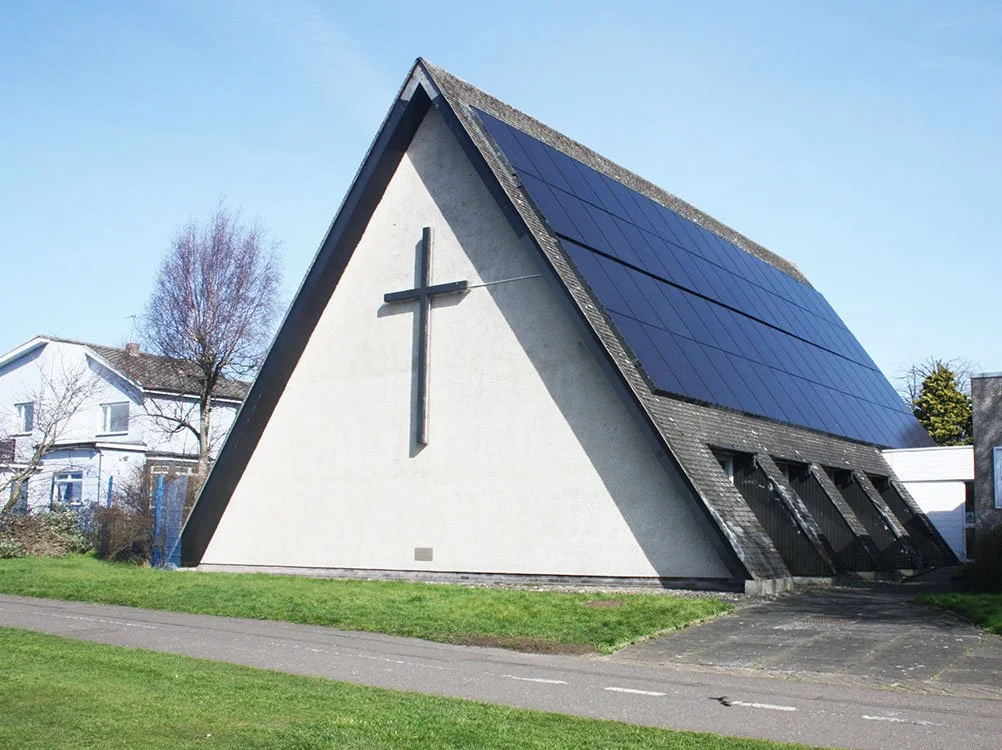
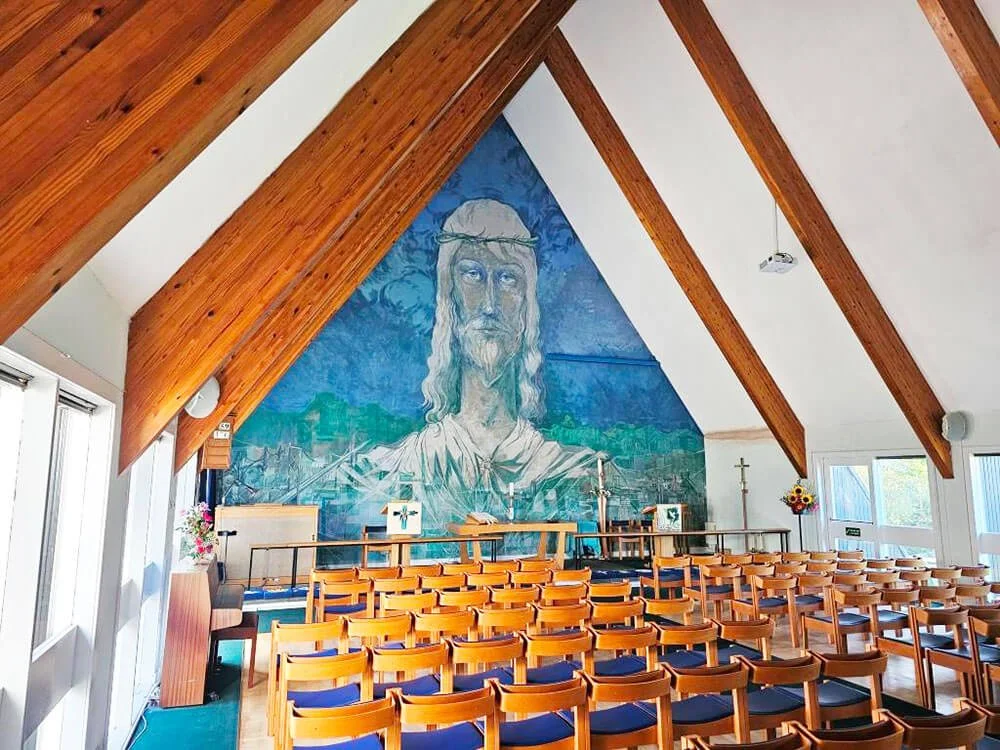
FROM PLANNING TO DELIVERY: ROSYTH METHODIST CHURCH
Rosyth Methodist Church provides a practical example of how a considered approach to decarbonisation can turn an aspiration into a deliverable project.
Working towards the Methodist Church's aspirational Net Zero 2030 target, the congregation began by identifying opportunities to improve energy efficiency and reduce reliance on fossil fuels.
An energy audit undertaken through Business Energy Scotland helped establish potential improvements. The church subsequently secured funding through the Community and Renewable Energy Scheme (CARES) for a solar photovoltaic installation and battery storage.
This was not the end of the journey, but the first phase of a wider decarbonisation strategy.
D3A was appointed as Project Manager and Principal Designer for the installation, overseeing the delivery of a 29kWp solar PV system and 23kWh battery.
The project is now progressing towards the next phase: replacing the existing gas heating system with a low-carbon alternative. Following an assessment of different options, an air-to-air heat pump system was identified as the preferred solution, with planning approval secured and detailed design completed to support a further funding application.
Rosyth demonstrates the value of looking beyond a single intervention. By considering the building's wider energy requirements and planning improvements in stages, the church has established a foundation for further decarbonisation.
Read the Rosyth Methodist Church decarbonisation case study →
WHAT CAN YOUR CHURCH DO NOW?
-
UNDERSTAND YOUR ENERGY USE
Gather recent electricity and gas bills and look at how consumption changes throughout the year.
-
REVIEW HOW THE BUILDING IS USED
Consider heating patterns, occupancy, controls and whether the building is being used efficiently.
-
IDENTIFY IMMEDIATE OPPORTUNITIES
Simple improvements to controls, lighting and day-to-day energy management may provide a useful starting point.
-
SEEK INFORMED ADVICE
A church-specific energy assessment can help identify priorities and avoid unintended consequences.
-
DEVELOP A LONGER-TERM PLAN
Establish a realistic sequence of improvements, including those that may require future funding.
A CLEARER PATH TO NET ZERO
Decarbonising a church building is rarely a straightforward process. It requires balancing environmental ambitions with practical considerations, financial constraints, building characteristics and the needs of the congregation and wider community. But it doesn't have to happen all at once.
The first step isn't finding the funding. It's understanding what your building needs and developing a plan to get there. With the right preparation, churches can make informed decisions, pursue funding opportunities with greater confidence and take meaningful steps towards Net Zero.

NEED HELP PLANNING YOUR CHURCH’S JOURNEY TO NET ZERO?
d3associates works with Methodist Churches and other faith organisations to understand their buildings, identify opportunities for decarbonisation and develop practical strategies for reducing energy use and carbon emissions.