
ROSYTH DECARBONISATION PROJECT
ROSYTH METHODIST CHURCH
BACKGROUND
Rosyth Methodist Church is a busy and active congregation working in partnership with St. Margaret’s Scottish Episcopal Church. As part of the Methodist Church’s aspirational target to reach Net Zero by 2030, the Church is committed to reducing the carbon emissions associated with its building.
An energy audit undertaken through Business Energy Scotland identified opportunities to improve efficiency and reduce reliance on fossil fuels.
Following this, the Church successfully secured funding from the Community and Renewable Energy Scheme (CARES) to install a large solar photovoltaic (PV) array alongside a battery storage system.
This installation represents the first phase of a wider decarbonisation strategy. With renewable electricity generation now in place, the next step will focus on replacing the existing gas boiler with a low-carbon heating solution.
OUTCOME
D3A was appointed as Project Manager and Principal Designer under the CDM Regulations for the solar PV and battery installation, delivered by AES Renewables. D3A provided full project oversight, ensuring regulatory compliance, effective coordination and successful delivery aligned with the Church’s funding and sustainability objectives.
The 29kWp solar PV system is forecast to generate approximately 22,000kWh of electricity per annum. This will provide the majority of the anticipated future electrical demand, particularly once the heating system is electrified.
To maximise on-site consumption, a 23kWh battery storage system was incorporated. The battery enables surplus daytime generation to be stored for evening use, reducing grid dependency and improving financial performance. During winter, the system also allows overnight charging at lower tariff rates. Any excess electricity will be exported, generating a modest income stream for the Church.
Following successful completion of the renewable installation, D3A is now assessing options to decarbonise the heating system. Solutions under consideration include:
Air-to-water heat pump systems
Air-to-air heat pump systems
Direct electric solutions in less frequently used spaces, such as radiant heating or controllable electric panel heaters
Options will be evaluated against cost, performance, user comfort and suitability for the building’s usage. Subject to detailed design, planning approval and tender, a further CARES grant will support delivery of the next phase.
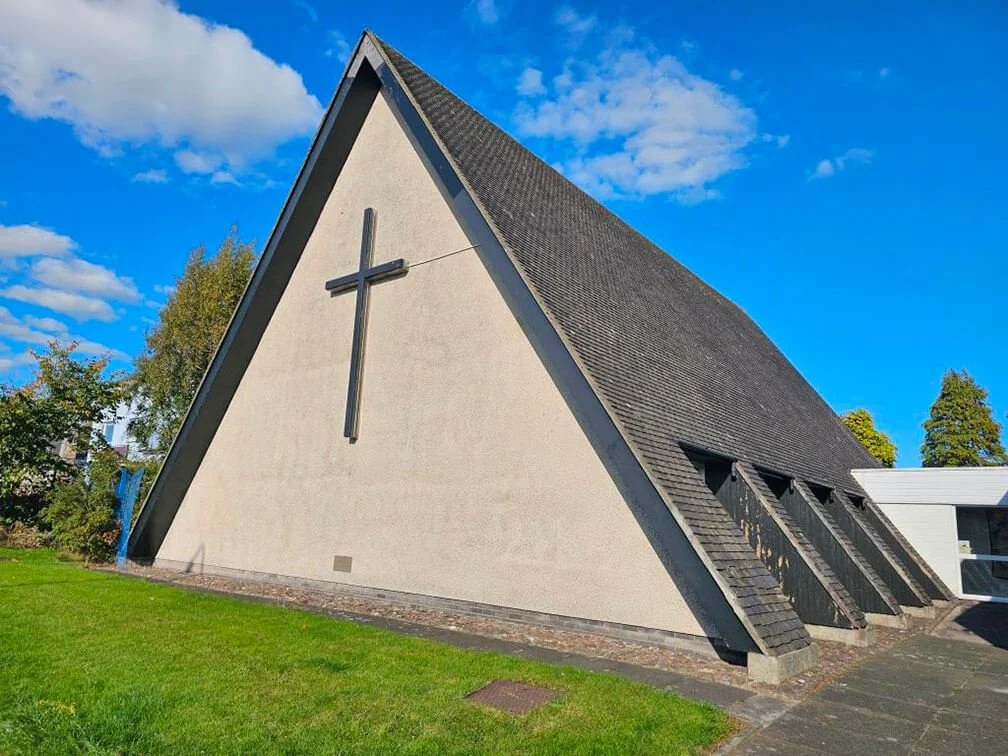
Rosyth Methodist Church - external view
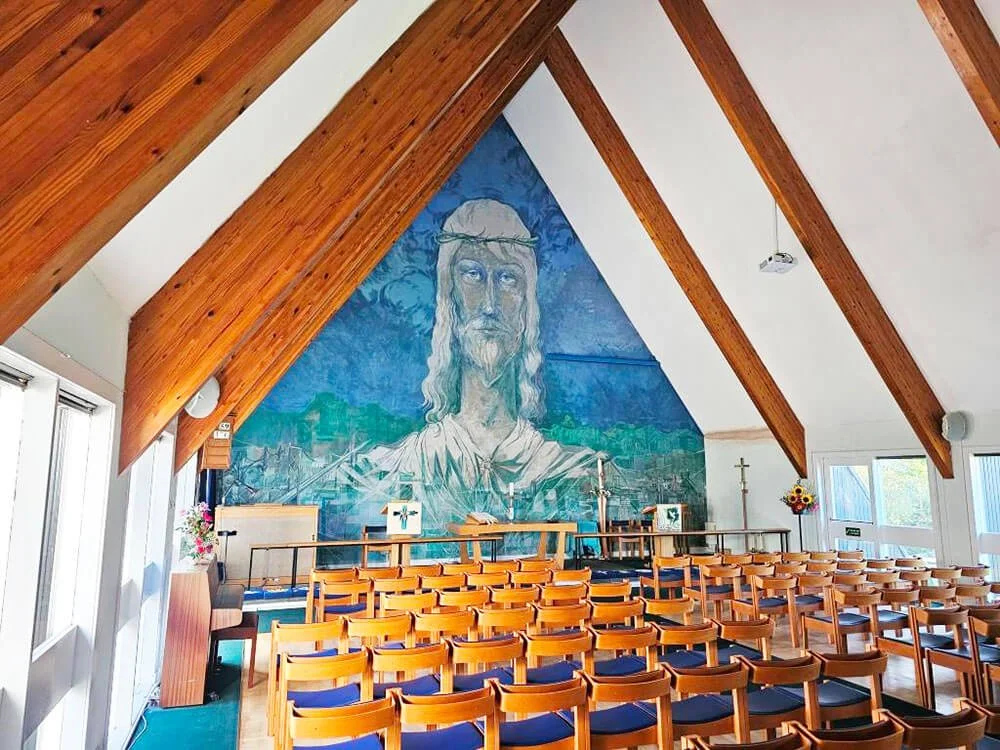
Rosyth Methodist Church - interior
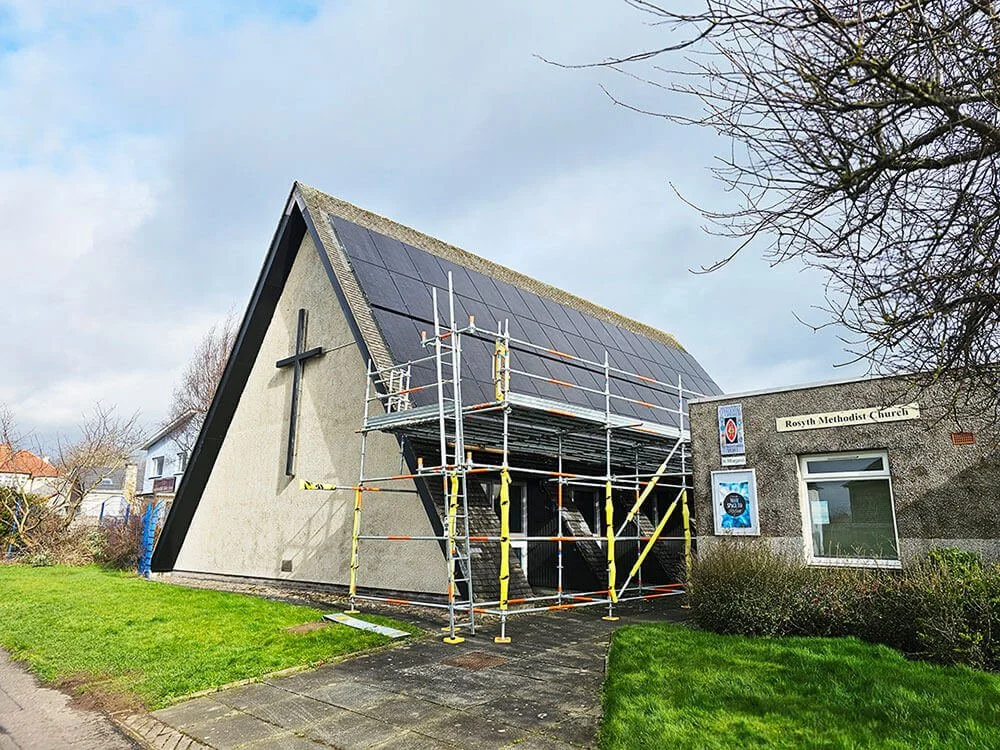
Rosyth Methodist Church during installation of solar PV panels